

 By Anshima Gupta
Seychelles Travel Guide · Diving Experiences
Scuba diving in Seychelles offers a way to explore underwater environments with specialist equipment and qualified supervision. If you have never dived before, you may be able to book an introductory experience without completing a full certification course. The right option depends on your health, comfort in the water, operator requirements and the conditions on the day.

Quick Answer: Can beginners try scuba diving in Seychelles?
Many dive centres offer introductory dives for people who are not yet certified, subject to age, health, swimming ability, operator rules and sea conditions. A first dive normally includes equipment familiarisation, a safety briefing and close instructor supervision. Confirm the exact programme and eligibility requirements with the dive centre before booking.
Quick Facts: Scuba Diving in Seychelles
| Best for | Travellers interested in guided underwater exploration |
|---|---|
| Beginner option | Ask about an introductory or discover-scuba experience |
| Certification | Not always required for an introductory experience; required for independent certified-diver activities |
| Popular bases | Mahé, Praslin and La Digue; availability varies by operator |
| Equipment | Usually arranged through the dive centre; confirm what is included |
| Safety | Medical screening, briefing, qualified supervision and appropriate conditions matter |
What Happens on Your First Scuba Dive?
An introductory dive is designed for people who want to experience scuba diving without immediately enrolling in a full certification course. The exact programme differs by centre, so ask for a step-by-step explanation before paying.
1. Pre-dive checks
The operator explains eligibility, medical screening, the schedule, equipment and the conditions expected at the dive site.
2. Equipment briefing
Your instructor explains the equipment and basic underwater communication. Ask questions if anything is unclear.
3. Supervised practice
Depending on the programme, you may practise basic skills in a controlled setting before proceeding to the dive.
4. Guided underwater experience
If the instructor considers you ready and conditions permit, you follow their instructions during the supervised dive.
Do not feel pressured to continue if you are anxious, uncomfortable or unsure. Tell your instructor, and follow their decision about whether it is safe to proceed.

Where to Consider Scuba Diving in Seychelles
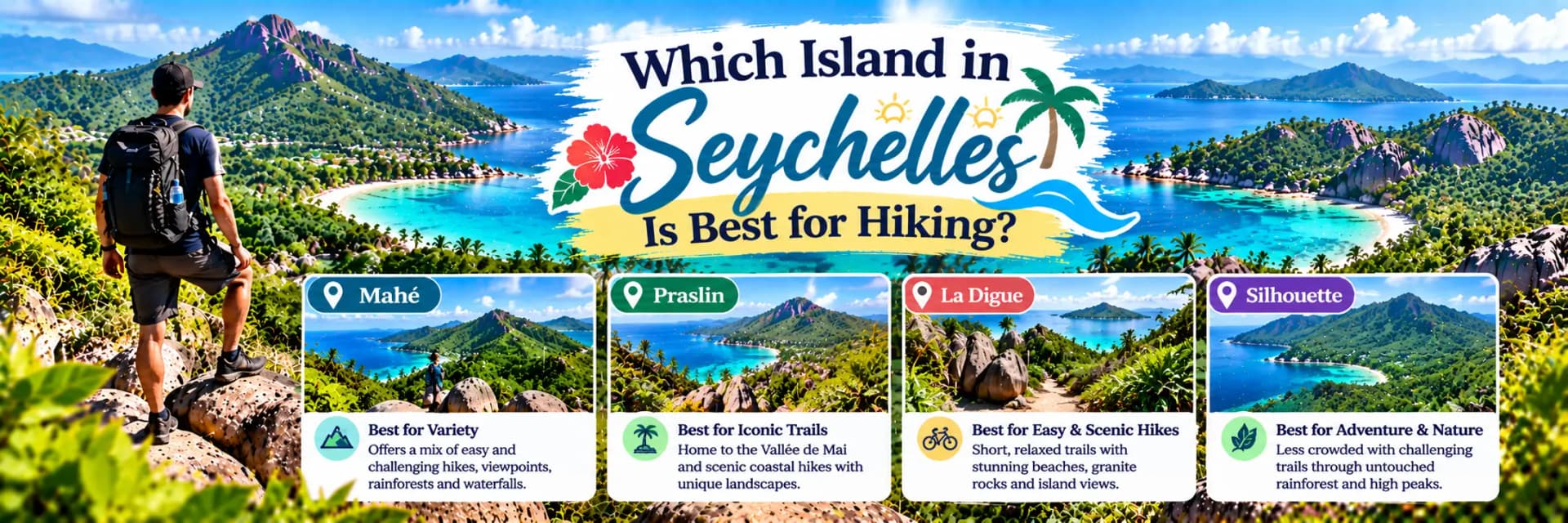
Mahé, Praslin and La Digue are useful starting points when researching a diving holiday. Site choice should be made with a local dive centre because depth, currents, visibility, weather and experience requirements vary.
1. Mahé
Mahé is a practical base for travellers staying near the main island's accommodation and transport network. Ask local centres which sites suit first-time divers and whether transfers are included.
2. Praslin
Praslin can be a convenient base for combining a stay on the island with guided marine activities. Confirm the dive site's conditions, departure point and beginner suitability before booking.
3. La Digue
If La Digue is part of your itinerary, ask about local diving availability, weather-dependent schedules and transport arrangements. Do not assume every operator offers the same programme.
4. Choose the site with your instructor
The most suitable site is not necessarily the most famous. Prioritise the conditions, your experience level, the operator's briefing and the dive plan over a specific underwater photograph.
For a broader itinerary, explore our Mahé travel guide, island-hopping guide and things to do in Seychelles.
How to Choose a Scuba Diving Centre
Choosing a reputable operator is one of the most important parts of planning your first dive. Ask clear questions before confirming your booking.
- Does the centre meet applicable local requirements and use appropriately qualified instructors?
- Is the programme an introductory dive or a certification course?
- What are the age, swimming and medical eligibility requirements?
- How many participants will each instructor supervise?
- What equipment, transfers and park or boat fees are included?
- What happens if weather or sea conditions are unsuitable?
- What emergency procedures and safety equipment are available?
- Is there a clear policy for cancellation, postponement or deciding not to dive?
For general visitor guidance, consult Tourism Seychelles safety resources and its minimum criteria documents for dive centres.
Do You Need Scuba Diving Certification?
Not necessarily for every introductory experience. Some dive centres offer supervised programmes for beginners who meet their eligibility rules. Certified dives, however, require the appropriate recognised qualification and must match the diver's experience and limits.
If you want to continue diving after your holiday, ask a recognised training organisation or dive centre about the appropriate beginner certification course. A single introductory experience should not be treated as a substitute for full training.
Equipment and Preparation
A dive centre will generally explain which equipment is included and how it is fitted. Confirm the details before departure rather than assuming every package includes the same items.
- Mask, fins and snorkel where required by the programme.
- Buoyancy control equipment, regulator and cylinder provided and checked by the operator.
- Exposure protection appropriate to the water and dive plan.
- Towel, drinking water and sun protection for time outside the water.
- Any required medical documentation and your booking confirmation.
Do not attempt to assemble or use scuba equipment without proper instruction. Tell your instructor immediately if a mask, regulator or other item does not fit or function correctly.
Health and Safety Before Diving
- Never dive alone; follow your instructor and assigned buddy procedures.
- Attend the complete site and boat safety briefing.
- Understand the planned depth, duration, conditions and underwater signals.
- Never hold your breath while ascending; follow your instructor's training.
- Do not dive when intoxicated, unwell or excessively fatigued.
- Follow dive-computer, ascent and post-dive instructions from your qualified professional.
- Plan flying and altitude travel after diving according to recognised dive guidance and the operator's advice.
- Consider appropriate travel and diving insurance, including emergency assistance and evacuation coverage.
The Seychelles Beach & Sea Safety Guide includes scuba-related guidance. Your dive professional should provide instructions specific to your programme and conditions.
How Much Does Scuba Diving Cost?
Prices vary by operator, island, programme, number of dives, equipment, boat transfers and any applicable fees. An introductory dive and a certified-diver trip are different products, so compare like-for-like packages.
Before booking, ask for the total price and check whether it includes equipment, instructor supervision, boat transport, park entry, taxes and transfers. Also confirm the cancellation policy and what happens if conditions prevent the dive.
Avoid choosing a provider on price alone. Clear safety procedures, suitable supervision and transparent terms are important parts of the experience.
Plan Your First Scuba Dive in Seychelles
Compare your island itinerary, ask the right safety questions and choose an introductory programme that matches your experience and comfort level.
Explore Seychelles Activities Compare SnorkellingSafety note: this guide is for travel planning and does not replace professional training, medical advice or the dive operator's safety briefing. Eligibility, site access and conditions vary.





 (877) 794-6004